Playing the NeurOlympics soon, or just finished? Discover what the experience entails here.


Our demo offers a quick way to get familiar with the games. Unlike the actual assessment, data from this demo session will not be saved.

Understanding your talents goes beyond your resume or acquired skills—it’s about uncovering your potential and the cognitive foundations that drive your success. Our games are specifically designed to assess these foundations by revealing your unique patterns of thinking, deciding, acting, and adapting.
The results from these games then reveal whether there’s a match between your talents and the role or team you're being considered for, helping both you and the organization make smarter, more confident decisions. But even if this opportunity isn’t the right fit, it doesn’t end here. You’ll gain valuable insights into your strengths and career direction—and you can become part of our exclusive Brain Pool, where we can match you with other exciting opportunities that perfectly suit your potential.

Traditional assessments often rely on text-based questions and self-reflection, which may not fully capture your abilities or may be shaped by how you think you should respond. We believe there's a better way.
That's why our scientifically developed games offer an engaging, objective, and fair way to understand your unique cognitive approach. You don't just tell us your skills; you show them by navigating interactive challenges. This allows us to objectively measure how you think, decide, act, and adapt - revealing your natural strengths. Our commitment is to provide a truly equitable look at potential, ensuring everyone can showcase their inherent talents.

Play the games and receive your unique Brain Profile.

Your Brain Profile is explained using two key components:
Talent Landscape
Discover which career paths best fit your brain with your position on the Talent Landscape.
Behavioral Cycle
Understand how you progress from thought to action. The Behavioral Cycle maps your Natural Brain Preferences across 6 distinct steps. Learn about each of the 6 steps here.

To assess your fit for a specific role, we combine your results with skill frameworks like ESCO and O*NET, as well as company-specific requirements. This allows us to identify the key skills needed for success and see how your strengths align, ensuring your brain is an ideal match for the job's demands.

Invited for an interview after your assessment? That's a strong sign you could be a great fit! Use this insight. Before your interview, explore your Brain Profile. This will help you enter the interview feeling more confident and ensure a smoother conversation.
As you review your profile, consider the following:
Can you think of specific examples where you've demonstrated your strengths?
How have these strengths benefited you or your team? What positive outcomes resulted?

Regardless of the outcome for this specific role, your journey doesn't end here. We offer effective ways to keep growing.
Master Your Insights: Learn to effectively apply insights from your Brain Profile in our Deep Dive Sessions.
Explore New Opportunities: Join our exclusive Brain Pool to be matched with other exciting opportunities that perfectly align with your unique potential.
NeurOlympics
Game-based assessment
What is a game-based assessment?
A game-based assessment is a method to assess someone's skills through specially designed games.
What are the NeurOlympics?
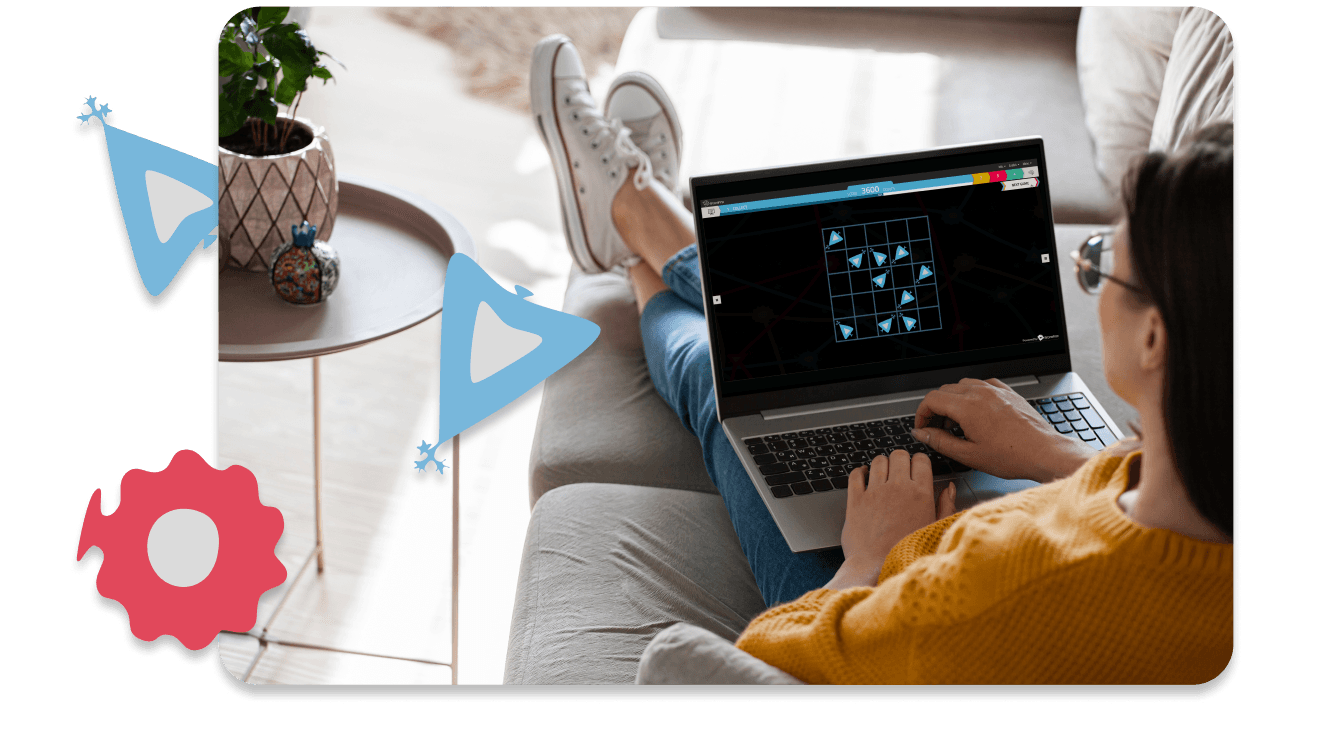
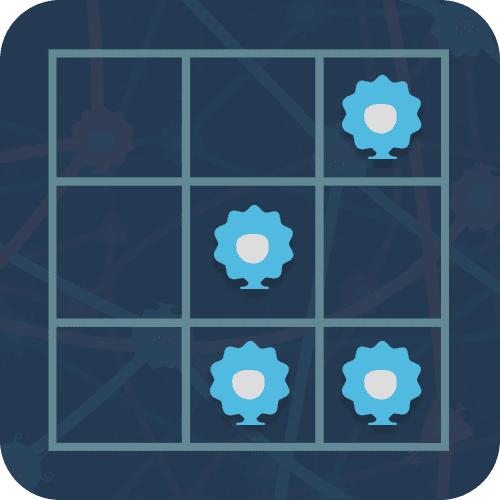
The NeurOlympics are four neuroscience-based games that together measure your brain's natural abilities. The game results produce a Brain Profile that accurately predicts how you will perform in a certain function or role. Each game lasts 10 to 15 minutes, which means you need about 45 minutes in total to play the NeurOlympics.
What is the advantage of the NeurOlympics over classic competency or intelligence tests?
The advantage of the NeurOlympics over classic competency or intelligence tests is that they offer a more detailed profile. People differ from each other in how they are intelligent, and classic intelligence tests do not consider that. The NeurOlympics provide insight into what makes someone smart and in which context that is useful.
Do gamers have an advantage over other players of the NeurOlympics?
No, gaming regularly will not significantly affect the game results. The games are relatively simple and measure your cognitive skills, not your gaming skills. Besides, we look at the mutual relationships between the cognitive skills.
Can you play the NeurOlympics on any device?
The games work best on a laptop or desktop, although a tablet is also suitable. Your phone's screen is too small, which can negatively affect your scores. The games work in all modern browsers, but for the best experience, we recommend using the latest version of Chrome, as the games are optimized for this.
Why do you have to play the same games for every job or role?
The games measure the biological building blocks of cognitive performance. Those building blocks are relevant for every job or role, only the way the building blocks relate to each other is different for every job or role. We can therefore use the same games to assess whether someone fits a certain job or role.
Is there a time limit for completing the NeurOlympics?
The NeurOlympics do not have a time limit. The games stop as soon as we have collected enough data to create a cognitive profile. This takes an average of 45 minutes in total.
Game results
What do the game results say about a candidate's abilities and about how they will perform in a certain job?
The results show whether a candidate naturally fits the role and how quickly he or she can learn the necessary new skills. Although the results offer no 100% guarantee, they provide a strong, objective indication of future success. If a candidate's match score is high, it is a sign that the required biological building blocks for the requested skills are present. You can then assume that the work-related skills have already been developed or can be learned quickly.
How reliable are the outcomes of the games when it comes to whether or not I am the right person for a vacancy?
The results of the games indicate which work environments and behaviors naturally align with your brain, and which are less suitable. About 50% of people whose Brain Profile matches the desired profile for a role turn out to be a good match. This is significantly higher than the suitability rate of about 5% for those whose profiles do not match. Although 100% certainty cannot be guaranteed, your Brain Profile offers a strong, objective, and unbiased indication of whether certain work naturally suits you or whether you will have to put in a lot of effort to bring that work to a successful conclusion.
Do stress or a bad night's sleep affect the results?
Yes. Stress and a bad night's sleep can give a distorted view of your cognitive skills. Therefore, it is important that you are relaxed and well-rested when you play the games.
If I don't recognize myself in the results, can I redo the games?
It can happen that you do not recognize yourself in the results of the assessment: it happens to about 10% of players. The NeurOlympics objectively measure how your brain works, and that may differ from how you see yourself. We only advise replaying the games if the conditions under which you played were not optimal. This is because under equal conditions the results are typically the same.
What is the best moment to do the assessment?
The best moment is in the morning when you’re well-rested. Make sure you’ve slept well and are free from distractions.
Can I try the game a few times first, before I play it 'for real' as part of the application procedure?
That is not necessary. The NeurOlympics have a high test-retest reliability, which means that you get very similar results if you play the games again. We also see that practicing the games hardly affects the scores. Before each game there is a practice round, to make sure that you understand the goal well before you actually start.
Do I achieve better results if I do the assessment several times?
The NeurOlympics have a high test-retest reliability, which means that you get very simmilar results if you play the games again. If the results are slightly different, it usually has to do with factors such as concentration or sleep quality.
What do the results tell me about my IQ?
BrainsFirst's assessment measures core brain functions that correlate strongly with IQ (0.60-0.75). But it goes further than traditional IQ tests. Where IQ tests can only predict how someone will perform for a limited number of professions, we look 'broader' at natural cognitive skills and link them to specific role or team requirements.
(Neuro)diversity and inclusion
I am neurodivergent (ADHD, ASD). Are the NeurOlympics suitable for me?
Our game-based assessment was developed to map the natural cognitive skills of every brain accurately and bias-free, including neurodivergent brains. Without (unconscious) bias, we give insight into how someone performs in different situations. This way, we can objectively determine whether there is a cognitive fit between the candidate and the job requirements.
Do dyslexia and dyscalculia influence the results?
The games contain short, simply written instructions that the candidate can take as long as necessary to read. The assessment itself is language-independent, so people with dyslexia do not experience any disadvantages. In some cases of dyscalculia, there is an affected spatial insight which can influence the results. In this specific case, we advise candidates to request an alternative assessment from the organization where they are applying.
Do sensory limitations influence the results?
Color blindness: The colors in our assessment have been carefully chosen. The contrast between the colors is large, so the effect of color blindness on the game results has been assessed as minimal. Deafness: The NeurOlympics do not use auditory signals, so impaired hearing does not affect the results.
Do gender, ethnic origin, age and differences influence the results?
Brain data are pure, measurable, and bias-free. A brain is a brain. Yet there are also subtle but essential biological differences between people at the brain level that we must take into account for a fair outcome. We do this for age and gender by always comparing the candidate's data with data from the corresponding norm group: a scientifically sound comparison group. An example of a norm group is men between 25 and 30 years old. For ethnic origin, the natural differences are very small to negligible.
Can I take an alternative assessment instead of the NeurOlympics?
It may happen that a candidate still does not feel comfortable playing the NeurOlympics. In that case, it is important that the candidate indicates this in time (before the vacancy closes) to the relevant organization. The organization is then responsible for offering an alternative assessment with which the candidate can still demonstrate their qualities. This can be done, for example, through a short telephone conversation and/or a structured interview. Note: the responsibility for requesting an alternative assessment lies with the candidate themselves. The responsibility for offering an alternative assessment lies with the organization using the NeurOlympics.
Cognition
What is cognition and why are good cognitive skills important?
Cognition includes the processes that take place in the brain to process information, including selecting relevant input, focusing attention on thoughts, and performing motor actions to achieve a desired result. Cognitive skills, also called executive functions, are important because they are essential for efficient, goal-oriented behavior.
What is cognitive diversity and why is it important?
Cognitive diversity refers to the variety in how individuals think, approach problems, and make decisions. In a team setting, this means there are members with diverse thinking styles and problem-solving abilities. This diversity is crucial because it improves the effectiveness and innovation of a team. By combining multiple approaches, cognitively diverse teams are better equipped to tackle complex problems from different perspectives and generate a wider range of potential solutions.
Does age affect your cognitive performance?
Our brains development is only completed around our 22nd year of life. The child's brain is therefore still in full development. Children also make major leaps in development, making it difficult to predict what a child's final Brain Profile will look like. To make the most accurate prediction of your cognitive performance, we use specific norm groups within different age cohorts. For children, we seperate groups per half year (for example, the group 9 – 9.5 years). For adults, this is every five years (for example, the group 25 – 30 years).
Does personality play a role in cognitive assessments?
Although cognitive assessments focus on thinking ability, your personality can influence how you handle challenges. You can read more about the connection between cognition and personality here: https://certifications.brainsfirst.com/resources/personality/
Validity
Are the results of the NeurOlympics valid and reliable?
The NeurOlympics have been designed and tested, both according to our own scientific standards and the guidelines set by the Dutch Committee on Test Affairs (COTAN). This means that our methodology is scientifically substantiated and meets the highest standards in the field of reliability, validity, and user-friendliness. For more information, view the page on Safety & Compliance.
What does BrainsFirst do to prevent bias?
BrainsFirst creates statistical models based on brain data. Based on these models, we make the statistical assessment of whether a person's brain fits a job. Brain data are much less sensitive to bias than, for example, CVs, language use, and facial expressions. Still, to prevent bias, you should always carefully investigate how a model behaves in the real world. We do this by applying our model to a group of 2000 carefully selected candidates. By doing so, we can check for any bias regarding gender, age, or education level. Any bias is then corrected. Also, we always compare a candidate's scores with the scores of a scientifically sound comparison group (norm group).
Privacy
How does BrainsFirst protect my data?
BrainsFirst complies with applicable laws and regulations in the field of personal data security, such as the Dutch General Data Protection Regulation (AVG) and international GDPR standards. Our internal processes are designed so that information security is continuously improved, ensuring personal data are always processed carefully and securely. For more information, take a look at the Safety and Compliance page.
Can I have my data deleted from the BrainsFirst database?
Yes, you can. To do so, send us an e-mail with a deletetion request.
Onboarding and career development
Can I also use the outcomes of the NeurOlympics for the onboarding of a new employee?
Yes, the Brain Profile shows what a new employee needs to function well within a team and to feel at home in a new workplace. You can use the insights when choosing a suitable workplace, assigning a mentor, and determining the first tasks. This is also valuable information for the employee themselves, as it gives them insight into their way of working and collaborating.
Can I also use the outcomes of the NeurOlympics for career development and career planning?
Yes, the Brain Profile shows how someone's brain works and identifies hidden transferable skills that are useful in multiple roles and functions. It helps to make informed decisions in the area of career development, learning & development, mobility, and career planning.
Goal Profiles
What is a Goal Profile?
If a customer wants to know whether candidates fit a certain job, we create a Goal Profile. Such a Goal Profile has two components. It combines the talents needed to flourish in a job and the behavior the talent must be able to show.
Which types of Goal Profiles does BrainsFirst work with?
Customers can choose from 3 types of Goal Profiles: 1) The Skill-based profile is based on data from the European Skills, Competences, Qualifications and Occupations taxonomy (ESCO) and the American Occupational Information Network (O*NET), which describe skills, competencies, roles, and jobs. The customer can supplement the databases themselves with specific information about the organization and/or the role. 2) The Selection-based profile is a Skills profile supplemented with data from previously hired candidates. For example: If all candidates previously hired score high on the natural brain preference 'Perceptive Observation', the Goal Profile is sharpened so that 'Perceptive Observation' becomes more important. 3) The Performance-based profile is based on the game results of employees. The customer ensures that all employees play the NeurOlympics and provides information about their performance. Based on this, BrainsFirst determines the cognitive profile required to be successful in a certain job, context, or role.