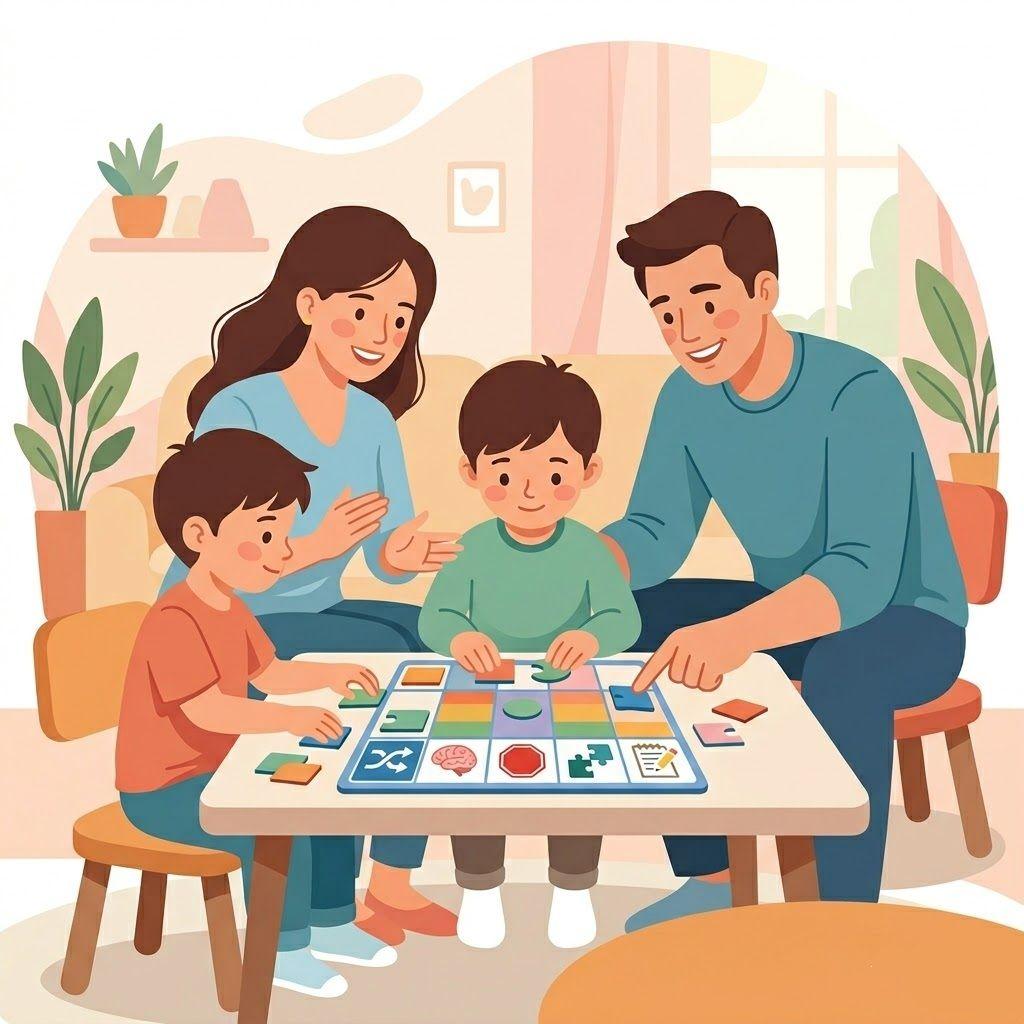
Parents can’t exactly control what their child looks like, how intelligent they become, how well they remember things, or how easily they switch between tasks and stay focused… or can they?
What if parents have more influence over their child, who they become and how they function? Before we can answer those questions, we have to look at the nitty-gritty. That means starting with the absolute basics: nature vs. nurture.
Nature vs. Nurture, or Nature and Nurture?
The cognitive development of a child is highly influenced by genetics, but that does not mean parents are off the hook. Think of biology as defining the "floor" and the "ceiling" of a child's potential. A child might have the genetic building blocks to reach an 8 out of 10 in focus. Without parental support, they might only function at a 5. However, with the right environment, they can maximize their potential and hit that 8 or even 10. Parents can't rewrite the genetic blueprint, but can help their child reach their natural potential.
Reaching this natural potential depends on a specific set of skills that are crucial to a child’s cognitive development and their ability to function well later in life, both academically and socially. These skills are known as executive functions. They include attention, inhibition, working memory, planning, and problem-solving, all of which help children navigate school, relationships, and everyday challenges.
In the long-standing nature vs. nurture debate, these five skills are shaped by both biology and the environment working together rather than against each other. This means that, the way parents raise, guide, and interact with their children matters more than many people realize.
Why Executive Functions Matter
Our lives are deeply shaped by social interactions. This is where executive functions reveal themselves again, specifically inhibition, which is really just a fancy word for self-control. These brain skills help us avoid interrupting others, stay focused in conversations, follow social rules, and shift attention between different topics when needed. Basically, they help us satisfy that deep human need to connect and fit in. But executive functions aren’t only useful for social connections. They matter in school, and even more importantly, in everyday life too.
On the academic side, having strong executive functions means better focus, a sharper memory for rules, and easier problem-solving. This makes it way easier for students to keep up in the classroom and genuinely engage with what they're learning. On the other hand, when these skills are weaker, children usually face behavioral struggles, such as aggression and trouble managing emotions. That is why supporting kids and helping them build stronger executive functions is so important, and it all starts with parents and caregivers.
How Parenting Shapes Executive Functions
Early childhood is considered a critical period for the development of executive functions because the brain is especially adaptable during these years up until eight years old. Since children spend most of this time with their parents or primary caregivers, the way adults respond to them can have an important influence on how these skills develop.
Research shows that sensitive and responsive parenting can support executive function development. This includes comforting children when they are distressed, encouraging them when they are unsure, and using verbal scaffolding, such as guiding children through problems step by step, asking reflective questions, or talking them through emotions and decisions.
Autonomy also plays an important role. When you give kids age-appropriate independence, you give them a chance to grow. Letting them make small decisions, solve problems, and explore freely is the perfect way to build up their executive functions.
Another important factor is contingent responsiveness, which means responding to a child in a way that matches what they need in that specific moment. For example, if a child excitedly shows a drawing, a responsive parent pays attention and reacts with enthusiasm. If the child wants to explore independently, the parent gives them space instead of stepping in unnecessarily.
Ultimately, the answer to whether parents can shape these core cognitive skills is yes. Parents have a great deal of influence over who their child becomes, and genetics isn't solely responsible for everything. Capable and adaptable minds are built, not just born. By understanding and actively leaning into responsive parenting during these critical early years, you have an incredible opportunity to guide your child. Through simple, supportive caregiving, you are helping them build the executive functions they need to learn, manage big feelings, and thrive everywhere in life.

 Jun 11, 2025